
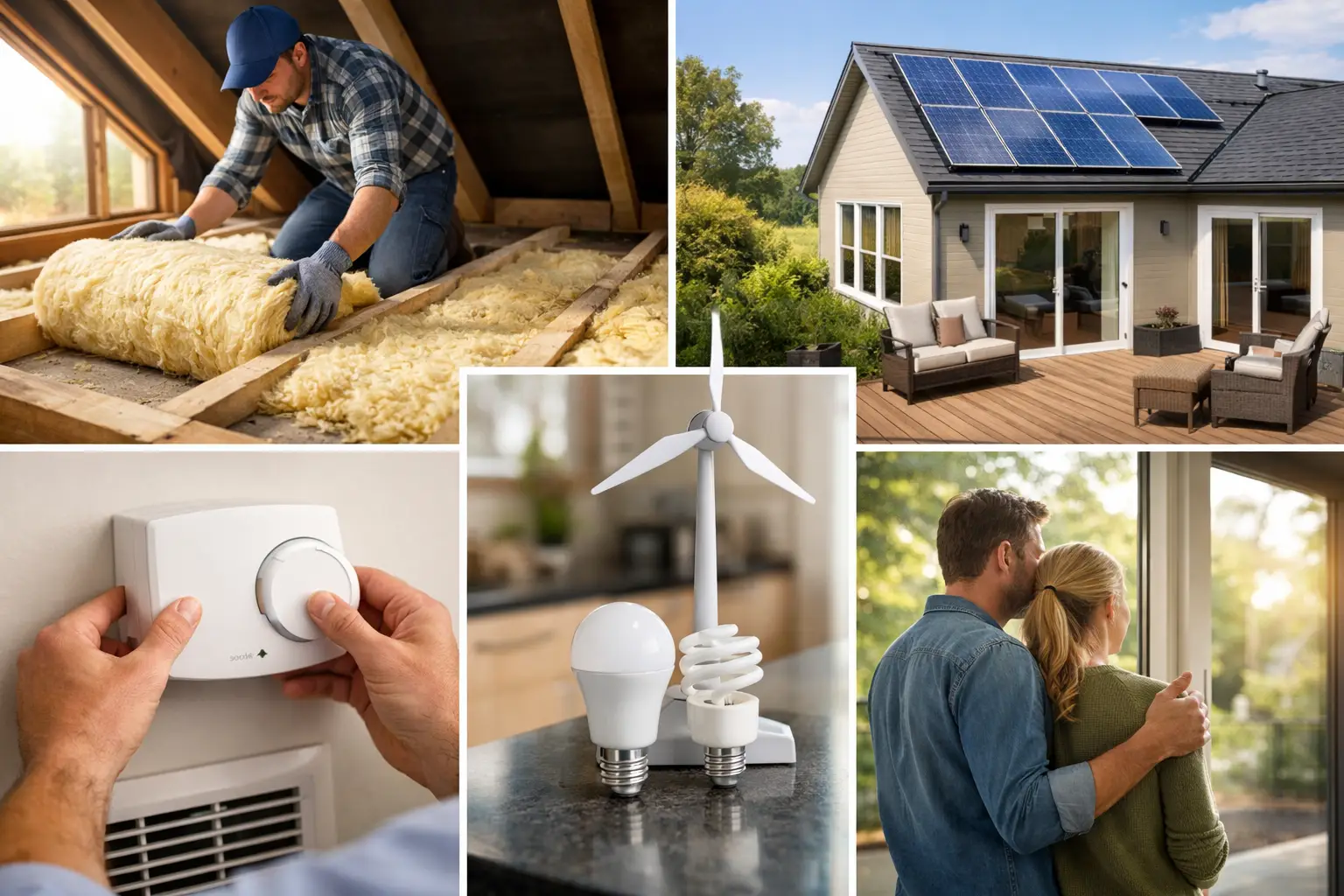
If your summer utility bill makes you wince before you even open it, your home is telling you something. The best energy efficient home remodeling ideas do more than trim monthly costs – they make everyday living more comfortable, reduce strain on aging systems, and help your home perform better through Sacramento’s hot summers and cool winter nights.
For many homeowners, energy savings start with one simple shift in mindset. Instead of chasing a single upgrade, it helps to look at your home as a system. Windows affect HVAC performance. Insulation changes how hard your air conditioner works. Kitchen and bathroom remodels can either improve efficiency or miss the opportunity entirely. The most successful remodeling plans balance appearance, comfort, and long-term operating costs.
Where energy efficient home remodeling ideas make the biggest impact
Not every upgrade delivers the same return. Some projects look efficient on paper but barely move the needle if the real problem is hiding elsewhere. That is why a thoughtful remodeling plan matters.
In established homes across Sacramento, Roseville, Rocklin, Folsom, and nearby communities, the biggest energy losses usually come from outdated windows, poor insulation, air leaks, and older mechanical systems. Lighting, appliances, and fixtures matter too, but they tend to have the strongest impact when paired with broader remodeling work.
If you are already planning to renovate, that is the right time to make efficiency part of the scope. Opening walls, reworking layouts, or replacing finishes creates access and flexibility. It is often far more cost-effective to improve insulation, ventilation, lighting, and fixtures during a remodel than to revisit those areas later.
Start with the building envelope
The building envelope is everything that separates your conditioned indoor space from the outdoors. If that shell is underperforming, your heating and cooling system has to compensate.
Upgrade insulation where it counts
Insulation is not glamorous, but it is one of the most valuable improvements you can make. In older homes, attic insulation is often inadequate by current standards, and wall insulation may be inconsistent or missing in certain areas. During a remodel, improving insulation behind new drywall or in opened ceiling cavities can make a noticeable difference in comfort.
The trade-off is access. Attics are usually straightforward. Exterior walls are more disruptive unless they are already being opened during renovation. That is why insulation upgrades make the most sense when tied to a larger remodeling project.
Seal the leaks you cannot see
Drafts around doors and windows are obvious, but many leaks are hidden around recessed lights, plumbing penetrations, attic access points, and duct connections. Air sealing is one of the most overlooked ways to improve efficiency.
This kind of work is not always visible when the project is finished, which makes it easy to skip. But homeowners often feel the difference right away. Rooms stay more even in temperature, and HVAC systems cycle less aggressively.
Replace old windows thoughtfully
New windows can improve efficiency, comfort, and curb appeal, but they are not always the first upgrade a home needs. If your current windows are single-pane, drafty, or difficult to operate, replacement can be a smart investment. Low-E glass and quality frames help reduce heat transfer, which matters during long Sacramento summers.
That said, window replacement tends to be a bigger upfront cost than air sealing or attic insulation. If the budget is limited, it may be smarter to address the highest-loss areas first and phase window work over time.
Remodel kitchens and bathrooms with efficiency in mind
Kitchen and bathroom remodeling creates some of the best opportunities to improve how a home uses energy and water without sacrificing style.
Choose appliances and fixtures that reduce daily waste
A kitchen remodel is the right time to replace an aging refrigerator, dishwasher, cooktop, or range hood with more efficient models. The same goes for bathroom exhaust fans, lighting, and water fixtures. Newer products generally perform better while using less energy, and many are quieter and more reliable than older versions.
In bathrooms, low-flow showerheads and faucets can lower water use without making the space feel underpowered, provided you choose quality products. Cheap fixtures can create frustration. Better ones are designed to maintain a comfortable experience while reducing waste.
Improve lighting layers, not just bulb types
Switching to LED lighting is an easy win, but remodeling gives you the chance to do more than swap bulbs. A better lighting plan uses ambient, task, and accent lighting so you need less overall output to make the room feel bright and functional.
Under-cabinet lighting in kitchens, properly placed vanity lights in bathrooms, and dimmers in shared living spaces can all improve usability while cutting unnecessary energy use. Good design supports efficiency.
Ventilation matters more than many homeowners realize
Bathrooms and kitchens generate heat, humidity, and airborne particles. Without proper ventilation, that moisture can linger and lead to comfort problems or even material damage over time. A remodel is the time to make sure exhaust fans are correctly sized and vented.
This is one of those upgrades that rarely gets attention in design photos, but it affects how well the room performs for years after construction is complete.
Make HVAC and ductwork part of the remodeling conversation
A beautiful remodel can still leave a home uncomfortable if the heating and cooling system is outdated or poorly matched to the new space. If you are changing square footage, opening up rooms, or improving insulation levels, your HVAC system may need to be reevaluated.
Right-size the system for the home you are creating
Bigger is not always better. An oversized system can short cycle, wear faster, and leave humidity control inconsistent. An undersized system will struggle during peak temperatures. The right solution depends on your home’s layout, insulation, windows, and usage patterns.
That is why efficiency should be addressed as part of the full remodel plan, not as an afterthought. Mechanical upgrades work best when they are coordinated with envelope improvements.
Do not ignore the ducts
Leaky or poorly insulated ducts can waste a surprising amount of conditioned air, especially in older homes. If accessible during renovation, sealing or replacing problem sections can improve airflow and system efficiency.
This is another example of hidden work that pays off quietly over time. You may not show it off to guests, but you will feel it when rooms heat and cool more consistently.
Smart layouts can improve efficiency too
Some energy savings come from product choices. Others come from better space planning.
A remodeled layout that brings in more natural light may reduce the need for daytime artificial lighting. A better kitchen design can improve appliance placement and ventilation. A bathroom update can reduce excess moisture and improve airflow. Even replacing old flooring and finishes with materials that support insulation or thermal comfort can make rooms feel better year-round.
For homeowners planning additions, efficiency becomes even more important. New square footage should feel like a natural extension of the home, not a constant drain on heating and cooling. Matching insulation quality, window performance, and air sealing standards across old and new spaces helps avoid that problem.
The best remodeling strategy is rarely all or nothing
One reason homeowners delay efficiency upgrades is the assumption that everything must happen at once. In reality, the smartest plan is often phased.
If you are remodeling a kitchen this year and bathrooms next year, you can still make strategic decisions now that support future work. If a whole-home renovation is not practical, start with the areas where your home is clearly underperforming. Maybe that means attic insulation first, then windows, then a high-efficiency HVAC upgrade when the current system reaches the end of its life.
A good remodeling partner helps you prioritize based on budget, existing conditions, and long-term goals. That matters because the right answer is not always the most expensive option. It is the one that solves the right problem in the right order.
For Sacramento-area homeowners, that usually means paying close attention to heat gain, insulation, ventilation, and durable materials that can hold up over time. Style still matters, of course. But the best remodels do not force you to choose between a beautiful result and a practical one.
When energy efficiency is built into the remodeling process from the start, your home does more than look updated. It feels steadier, works harder behind the scenes, and supports the way you actually live. That is the kind of upgrade that continues to pay you back long after construction is finished.