
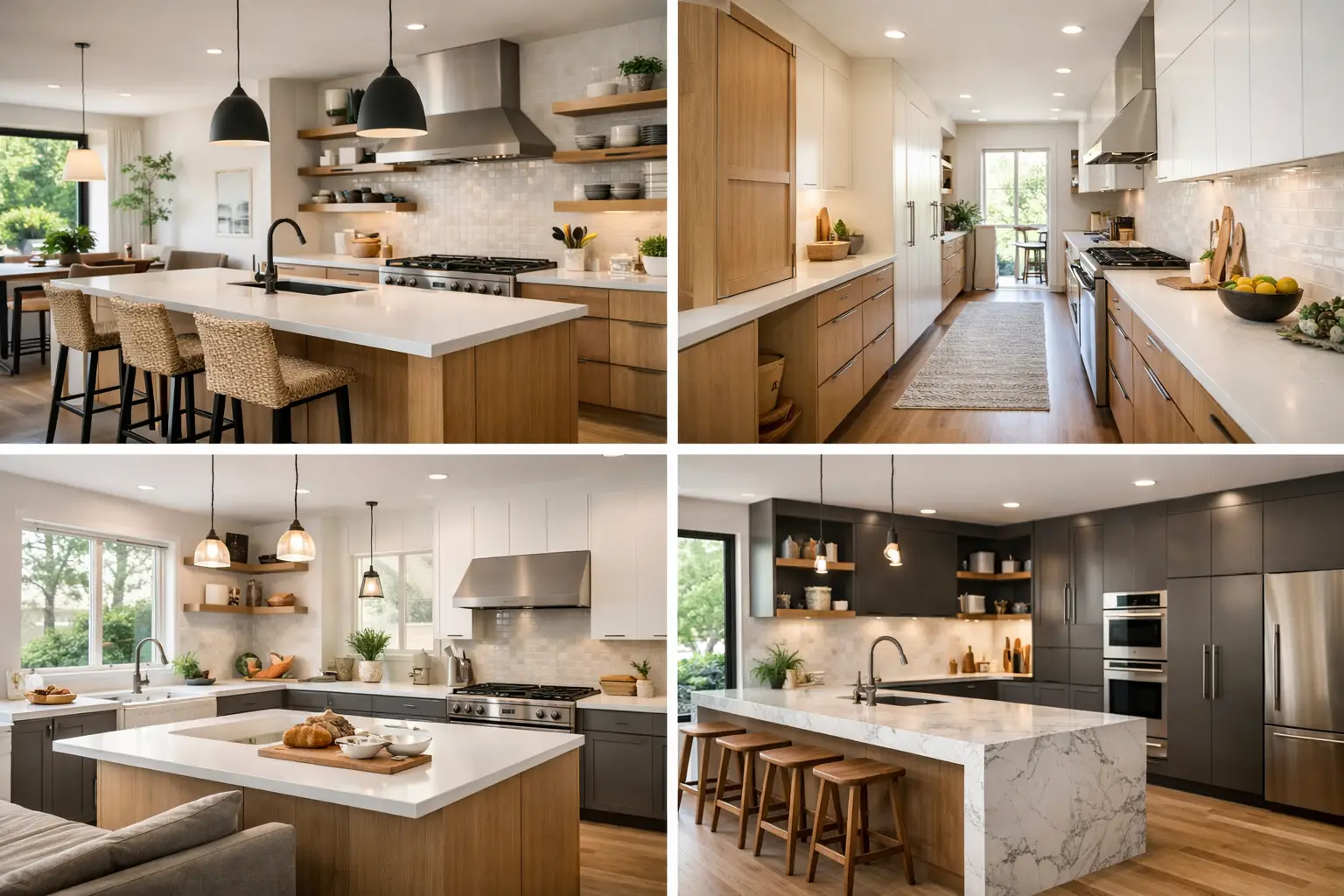
A kitchen can look updated on the surface and still feel frustrating to use. If you find yourself sidestepping family traffic, running out of landing space, or opening one cabinet to block another, the issue is usually not the finishes. It is the layout. The best kitchen layout redesign ideas focus on how the room actually works day to day, so cooking, gathering, and storage all feel easier.
For many Sacramento-area homeowners, layout changes matter more than any single material upgrade. A beautiful kitchen should still support school mornings, weeknight dinners, holiday hosting, and the simple routines that happen every day. That is why a smart redesign starts with flow, not just style.
Why kitchen layout redesign ideas matter so much
A kitchen layout shapes everything from traffic patterns to how much counter space you can really use. Two homes can have the same square footage and completely different levels of comfort, depending on where the appliances sit, how the cabinets open, and whether people can move through the space without crowding each other.
In older homes, it is common to see layouts built for a different era. You may have a closed-off kitchen with limited prep space, awkward corners, or a peninsula that cuts the room in half. In family homes, the problem is often congestion. More than one person uses the kitchen now, but the layout still functions like a one-cook room.
A redesign can solve these problems, but the right solution depends on your habits. A retired couple who loves to entertain will need something different than a busy family with young kids. Good remodeling is never one-size-fits-all.
1. Open the kitchen to improve daily flow
One of the most effective kitchen layout redesign ideas is removing barriers between the kitchen and adjacent living areas. Opening a wall or widening a pass-through can make the room feel larger, brighter, and more connected to the rest of the home.
This works especially well in older Sacramento homes where kitchens were often tucked behind separate dining or family rooms. By opening the space, you improve sightlines and make it easier to cook while staying part of the conversation.
That said, fully open layouts are not always the answer. Some homeowners prefer more visual separation, especially if they want to hide meal prep mess or reduce noise. In those cases, a partial wall, a larger cased opening, or a thoughtfully placed island can create connection without losing structure.
2. Replace an oversized peninsula with an island
Peninsulas can be useful, but they often create bottlenecks. If your kitchen has a narrow entrance or limited circulation, swapping a peninsula for an island may dramatically improve movement.
An island can add prep space, casual seating, and storage while allowing people to move around all sides. It tends to feel more open and flexible, especially in kitchens that connect to a family room or breakfast area.
The trade-off is clearance. An island only works if there is enough room around it. If spacing is tight, forcing one into the plan can make the kitchen feel cramped. In those cases, a smaller island or a reworked peninsula may still be the better choice.
3. Create better work zones instead of following old rules
You have probably heard of the kitchen work triangle, which places the sink, range, and refrigerator within easy reach. That concept still has value, but modern kitchens often function better with zones.
A zone-based layout considers how the kitchen is actually used. You might have a prep zone near the sink and trash pull-out, a cooking zone with spices and utensils nearby, and a breakfast zone where kids can access snacks without crossing the cook’s path.
This approach is especially helpful for larger households or anyone who shares the kitchen regularly. It reduces overlap and gives each task a logical home. In a remodel, shifting just one appliance or storage bank can make those zones work much more naturally.
4. Move the sink where it makes the most sense
The sink is one of the most-used features in any kitchen, yet in many outdated layouts it is placed with little regard for workflow. If your sink faces a wall, sits too far from prep space, or crowds the dishwasher and refrigerator, relocating it can have a major impact.
Many homeowners prefer a sink under a window or in an island where it supports both prep and cleanup. Others benefit from keeping the main sink on the perimeter and adding a secondary prep sink where entertaining happens.
This is one area where budget matters. Moving plumbing can increase cost, so it is worth weighing the benefit against the scope of the project. If the new sink location will improve the room every single day, it is often money well spent.
5. Give the refrigerator a better home
A poorly placed refrigerator can disrupt the entire kitchen. If it blocks a walkway, swings into prep space, or sits too far from the main work area, the layout will feel inefficient no matter how nice the cabinets are.
A better placement usually keeps the refrigerator accessible without putting it in the center of everything. In family kitchens, it can help to place it near the edge of the room so someone can grab drinks or lunch items without interrupting cooking.
Panel-ready models and built-in style enclosures can also reduce visual bulk, but placement comes first. The goal is to support movement, not just appearance.
6. Add storage where it improves the layout
More cabinets do not automatically mean a better kitchen. Some of the best kitchen layout redesign ideas involve smarter storage rather than simply packing in more boxes.
Deep drawers near the cooktop are often more useful than lower cabinets. A tall pantry can replace scattered food storage and free up valuable upper cabinet space. Corner solutions, appliance garages, and tray storage can also help, but only if they fit your actual routines.
This is where design and function should work together. Clean lines matter, but so does making sure your mixer, sheet pans, lunch containers, and small appliances have a place that makes sense.
7. Use seating strategically, not automatically
Almost every homeowner asks for seating in the kitchen, and for good reason. It supports casual meals, homework, conversation, and entertaining. But seating has to be planned carefully.
An island with overhang seating works well when there is enough room behind the stools for people to pass. A banquette may be better if you want to define an eat-in area without crowding the prep zone. In smaller kitchens, skipping seating altogether can actually improve function and make the room feel less forced.
The right choice depends on whether your kitchen is a true gathering space or mostly a hardworking cooking zone. There is no value in adding seats that no one will use.
8. Improve circulation through doors and openings
Sometimes the layout problem is not the cabinet plan at all. It is the way the room connects to nearby spaces. A doorway that opens into the work zone, a laundry room entry that conflicts with appliances, or a narrow path to the dining room can make a kitchen feel awkward.
Widening openings, relocating doors, or changing swing directions can improve circulation more than homeowners expect. These changes are easy to overlook at the start of a remodel, but they often have a big effect on how open and comfortable the finished kitchen feels.
In full-service remodeling, this bigger-picture thinking is where experience matters. The kitchen should work as part of the whole home, not just as an isolated room.
9. Design for the way you live now
The most successful layouts reflect current habits, not the way the house was used 20 years ago. If you work from home, host extended family, or cook more often than you used to, the kitchen should support that reality.
For some homeowners, that means adding a larger island and better entertaining flow. For others, it means maximizing storage, creating a quieter morning routine, or making space for two people to cook comfortably. Families with kids may prioritize clear sightlines and durable surfaces. Empty nesters may focus on ease, openness, and aging-in-place features.
That is why a personalized design process matters. At Everest Home Solutions, kitchen remodeling starts with understanding how the space needs to serve the people living in it, because a layout should not just look better on paper. It should make home feel easier.
How to choose the right layout direction
If you are weighing kitchen layout redesign ideas, start by paying attention to what frustrates you most. Maybe there is never enough prep space beside the range. Maybe guests always gather in the one walkway you need. Maybe the kitchen looks large enough, but half of it is hard to use.
Those everyday pain points usually point toward the right redesign strategy. A good plan balances flow, storage, lighting, structural realities, and budget. Some kitchens need a major reconfiguration. Others improve dramatically with a few thoughtful shifts.
The goal is not to fit your home into a trend. It is to create a kitchen that feels well-built, easy to use, and suited to the life happening around it. When the layout is right, the whole room starts to work the way it should.