
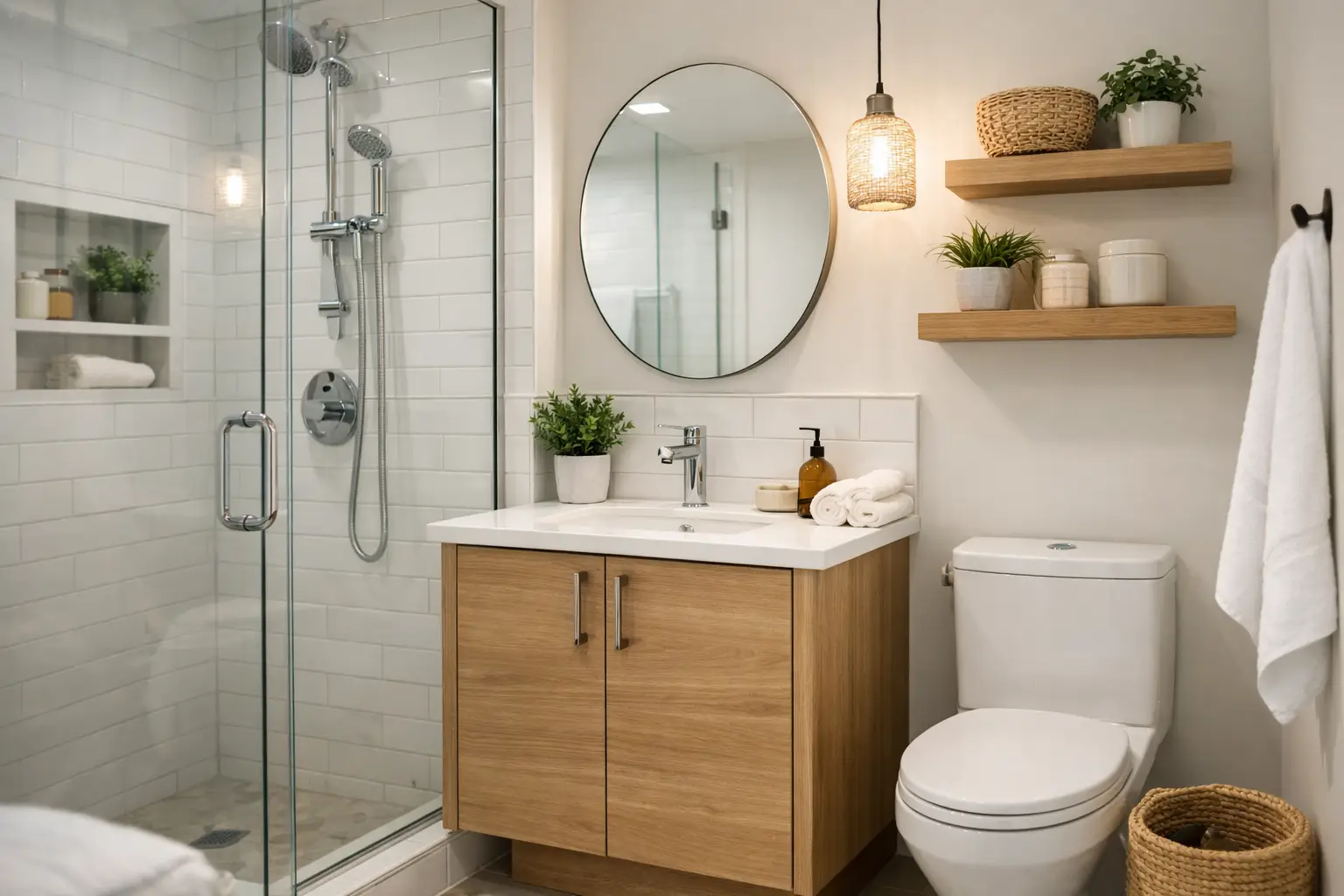
A small bathroom gets frustrating fast. When the vanity feels cramped, storage is limited, and every finish makes the room look tighter, even a simple morning routine can feel less comfortable than it should. The right small bathroom remodel ideas can change that completely – not by forcing more into the room, but by making every inch work harder and look better.
For Sacramento-area homeowners, small bathroom remodeling is often less about square footage and more about smart planning. Many established homes in Roseville, Folsom, Davis, and nearby communities have bathrooms with outdated layouts, bulky fixtures, poor lighting, or worn finishes that make the room feel smaller than it is. A thoughtful remodel can improve function, refresh the look, and add lasting value without expanding the footprint.
Start with the layout before the finishes
One of the most common remodeling mistakes is choosing tile, paint, and fixtures before solving the room’s actual layout problems. In a small bathroom, layout decisions matter more than almost anything else. If the door swing blocks the vanity, the toilet feels too exposed, or the shower takes up visual space, the room will still feel awkward even with beautiful materials.
Sometimes the best improvement is a modest one. Shifting a vanity a few inches, replacing a standard swing door with a pocket or out-swing option, or reworking the shower entry can make the room feel noticeably more open. These changes depend on plumbing locations, wall structure, and budget, so there is rarely a one-size-fits-all answer. But when layout comes first, every design choice after that has a better foundation.
Choose a vanity that fits the room
Vanities are often oversized for small bathrooms. Homeowners naturally want more storage, but a bulky cabinet can make the room harder to move through and visually heavier. A better approach is to match the vanity depth and width to the room rather than forcing a standard size.
Floating vanities are a strong option when you want the bathroom to feel lighter and more modern. Because the floor remains visible beneath them, the room can feel larger. A furniture-style vanity can also work well if it has open space below, though it usually offers less concealed storage. If storage is the priority, a compact vanity with deep drawers may perform better than a larger model with inefficient cabinet space.
Small bathroom remodel ideas for smarter vanity storage
Look for drawer organizers, built-in outlets, narrow side storage, and countertop materials that are easy to maintain. In a compact bathroom, convenience matters as much as appearance. The best vanity is not always the one with the biggest footprint – it is the one that supports daily use without crowding the room.
Replace a tub with a walk-in shower when it makes sense
In many older homes, a tub-shower combo dominates a small bathroom. If that tub is rarely used, replacing it with a walk-in shower can improve both function and appearance. A well-designed shower with clear glass and clean tile lines usually makes the room feel more open than a shower curtain or bulky framed enclosure.
This choice does come with trade-offs. If it is the only tub in the house, removing it may not be the best move for families with young children or for resale considerations in some neighborhoods. But in a primary bathroom or guest bath where shower use is the priority, a curbless or low-threshold shower can be a practical upgrade that also adds a more refined look.
Use large-format tile to reduce visual clutter
Small tile is not always the best choice for a small room. While mosaic tile has its place, too many grout lines can make a bathroom feel busier and more confined. Large-format tile on the floor or shower walls creates a calmer surface and can help the space feel more expansive.
Light neutral tones are often the safest choice when the goal is openness, but that does not mean the room has to feel plain. Warm whites, soft grays, muted taupes, and natural stone looks can add character without overwhelming the space. In homes throughout the Sacramento region, where homeowners often want a balance of modern style and long-term resale appeal, this approach tends to age well.
Build storage into the walls when possible
Storage is one of the biggest challenges in any small bathroom. Freestanding shelves and over-the-toilet cabinets can help, but they also take up visual space. Recessed storage is usually a cleaner solution.
A recessed medicine cabinet gives you mirror space and hidden storage in one feature. Shower niches keep products organized without relying on wire racks or corner caddies. If wall depth allows, recessed shelving near the vanity can hold towels or daily-use items without extending into the room. These details may seem minor during planning, but they have a major effect on how organized the bathroom feels once the remodel is complete.
Let lighting do more of the work
Poor lighting can make a small bathroom feel even tighter. Many bathrooms still rely on a single overhead fixture that casts shadows and flattens the room. A better lighting plan layers function and atmosphere.
Vanity lighting at face level improves daily tasks like shaving, makeup application, and grooming. Recessed ceiling lights can brighten the room evenly. If the design allows for it, a dimmer gives you flexibility between bright morning use and softer evening light. Even reflective finishes, such as polished tile or a well-placed mirror, can help move light through the room more effectively.
Small bathroom remodel ideas that make the room feel bigger
A large mirror, a floating vanity, a clear glass shower enclosure, and consistent flooring all help the eye move through the room without interruption. That visual continuity matters. In a small bathroom, creating openness is often less about physical expansion and more about reducing anything that stops the space from reading clearly.
Pick fixtures with a lighter visual footprint
Fixtures can change the feel of a bathroom more than many homeowners expect. A wall-mounted faucet, a frameless shower panel, or a compact toilet with a streamlined profile can free up space visually, and sometimes physically.
That said, not every sleek fixture is the right fit for every remodel. Wall-mounted plumbing may require more in-wall work. Specialty fixtures can increase costs. The goal is not to chase trends – it is to choose elements that support the layout, simplify maintenance, and hold up well over time.
For most homeowners, durable materials and easy-clean surfaces are worth prioritizing over novelty. A remodel should look current, but it should also make daily life easier.
Keep the color palette simple, then add warmth through texture
A small bathroom usually benefits from restraint. Too many colors, patterns, and finish changes can make the room feel chopped up. A simpler palette creates a more spacious impression and gives the remodel a cleaner, more intentional look.
That does not mean everything needs to be white. Warm wood tones, matte black accents, brushed nickel hardware, textured tile, or natural-look stone can add depth without making the room feel crowded. The key is balance. One or two statement elements often work better than several competing design ideas.
Improve ventilation while the walls are open
This is not the most exciting part of a remodel, but it is one of the smartest. Small bathrooms deal with moisture quickly, and inadequate ventilation can lead to peeling paint, mildew, and long-term wear on finishes.
If you are already opening walls or updating electrical, it makes sense to evaluate the exhaust fan. A quieter, properly sized fan can protect the investment you are making in tile, cabinetry, and paint. It also improves comfort, especially in bathrooms used by multiple family members.
Think long term, not just small
The best small bathroom remodel ideas are not only about making a room look larger. They are about making the space work better for the people who use it every day. That may mean aging-in-place features like a low-threshold shower, better lighting for visibility, easier-to-clean surfaces, or storage that supports a busy household.
In some homes, the right remodel is a cosmetic refresh with smarter materials. In others, it makes sense to invest in layout changes, custom cabinetry, or upgraded plumbing fixtures for a more complete transformation. A dependable remodeling process matters here. Clear planning, transparent pricing, and quality craftsmanship are what turn a good design into a bathroom that still performs well years later.
For homeowners who want a bathroom that feels more open, more useful, and more in step with the rest of the home, small changes can go a long way when they are made with purpose. At Everest Home Solutions, that is the difference between simply updating a bathroom and truly improving how your home lives every day.
If your bathroom feels too tight, too dated, or too hard to use, the smartest next step is not to force more into it. It is to make better choices with the space you already have.