
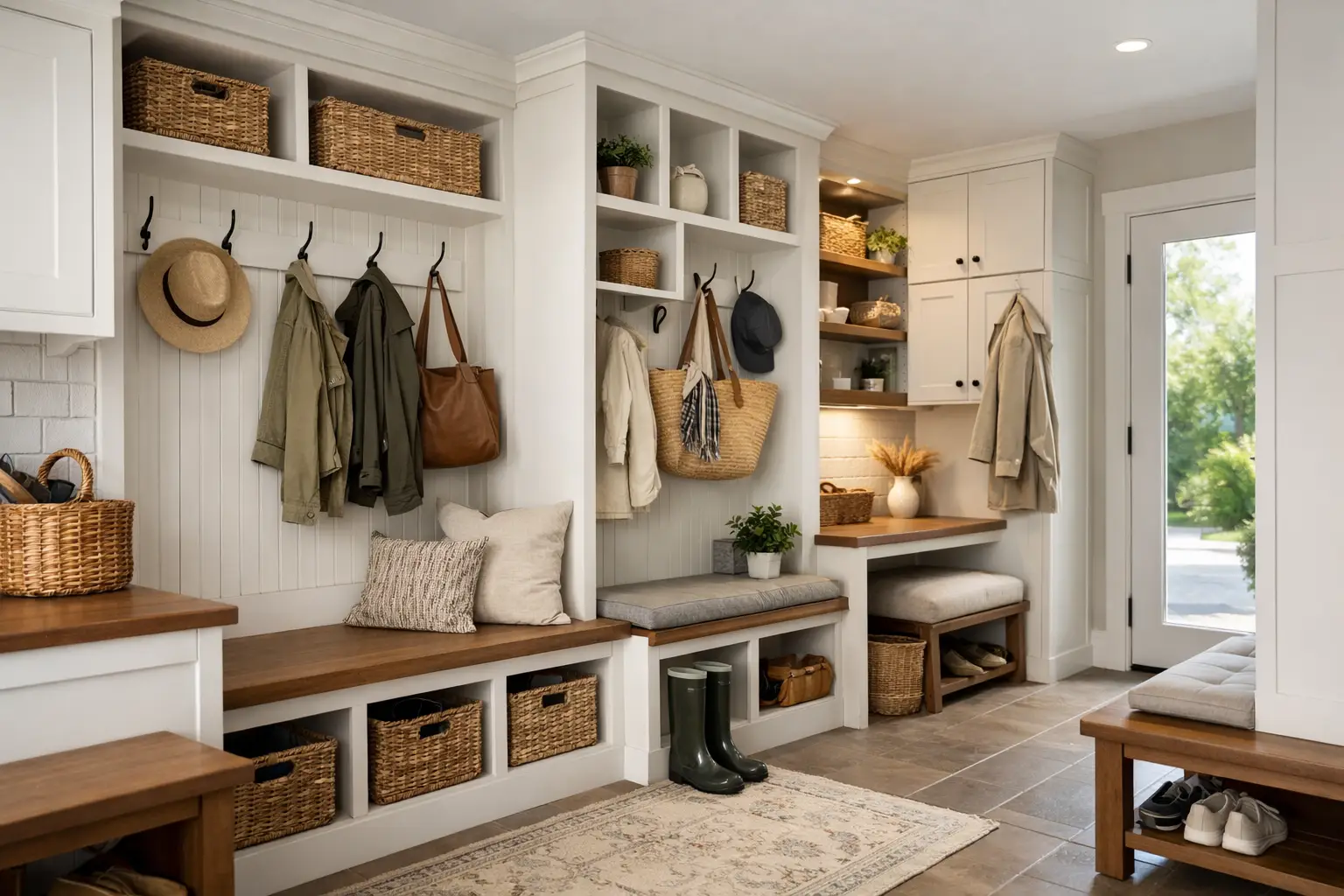
The fastest way for a home to feel cluttered is to let the entry do too much with too little space. Shoes pile up, backpacks land on the floor, pet gear migrates from room to room, and wet jackets end up over dining chairs. That is why custom mudroom addition ideas are less about adding a trendy feature and more about fixing a daily traffic problem with purpose-built design.
For many Sacramento-area homeowners, a mudroom addition makes the most sense when the house already has pressure points at the garage entry, side door, or back entrance. The right design can create order, protect interior finishes, and make the home easier to live in year-round. But not every mudroom should look the same. The best one is built around how your household actually moves.
What makes custom mudroom addition ideas worth it
A mudroom works best when it solves more than one problem at once. It should catch clutter before it reaches the kitchen, give every family member a place to drop essentials, and hold up to heavy use without feeling purely utilitarian.
That is where customization matters. A narrow hallway-style addition needs different storage than a wide family entry. A household with young kids benefits from lower hooks and easy-access cubbies, while a couple downsizing into a simpler routine may want concealed storage and a cleaner, more architectural look. If you are remodeling with long-term value in mind, the goal is not to pack in every possible feature. It is to build a space that earns its square footage every day.
Start with the drop zone, not the cabinetry
One of the most practical custom mudroom addition ideas is also the easiest to overlook. Before choosing bench styles, colors, or flooring, define exactly what enters the home through that door.
Think about shoes, work bags, sports equipment, umbrellas, dog leashes, lunch boxes, and seasonal outerwear. Then think about what should happen to each item the moment someone walks in. If there is no intentional landing place, clutter will win.
This planning step often shapes the entire layout. A garage-entry mudroom may need deep cabinet storage for bulk items and cleaning supplies. A front-side family entrance may benefit from a more polished built-in design with closed storage that feels connected to the rest of the home. Good remodeling starts with behavior, then builds around it.
Built-in lockers for households with busy routines
Lockers remain one of the strongest solutions for active families because they create clear ownership. Each person gets a dedicated space for shoes, bags, jackets, and extras. That cuts down on daily searching and keeps the room from turning into a shared pile.
The trade-off is visual weight. Full-height lockers offer excellent organization, but in a smaller addition they can make the room feel tighter. In those cases, a half-height bench wall with upper cubbies or hooks may be a better fit. It gives you structure without overwhelming the footprint.
Bench seating that actually earns its place
A mudroom bench should do more than look good in photos. It should make everyday transitions easier, especially for kids, older adults, or anyone changing shoes before entering the main part of the house.
A built-in bench with lift-up storage or deep drawers below is often the most efficient option. Open space under the bench works well too, especially if you want quick access to baskets or frequently used shoes. The decision comes down to how tidy you want the room to appear. Open storage is convenient, while closed storage hides the mess better.
Mudroom addition ideas with laundry built in
Combining a mudroom and laundry room can be a smart move when square footage is limited. It puts two hard-working functions in one zone and helps contain mess near the perimeter of the home.
This setup works especially well if you have kids, pets, or outdoor hobbies. Wet clothes, muddy towels, and dirty uniforms can go straight into the wash instead of traveling through the house. A utility sink, countertop for folding, and upper cabinets can turn the room into a true support space rather than a pass-through.
Still, this approach depends on layout. If the room is too tight, adding laundry can crowd the entry and make the space less comfortable to use. In some homes, it makes more sense to keep the mudroom focused on storage and circulation, then improve the laundry room separately.
Flooring and wall finishes matter more than most people expect
A mudroom addition takes more abuse than many larger rooms in the house. That means material selection should be guided by durability first, with style close behind.
Porcelain tile is a strong choice for flooring because it handles moisture, dirt, and wear with minimal maintenance. Luxury vinyl can also perform well if you want a warmer feel underfoot and a slightly softer budget. Natural wood is beautiful, but in a high-traffic entry it requires more caution and upkeep.
For walls, wipeable paint finishes, durable trim details, and paneling or shiplap-style accents can help the room stay looking clean longer. The best result usually comes from choosing materials that coordinate with adjacent spaces without pretending this room will not see heavy use. A mudroom should feel finished, but it should also be built for real life.
Storage should be layered, not one-size-fits-all
One of the most effective custom mudroom addition ideas is mixing storage types instead of relying on a single solution. Open hooks are great for everyday grab-and-go use, but they can look messy if everything stays visible. Tall cabinets hide larger items well, though they are less convenient for quick access.
Layered storage solves both issues. Use hooks for daily jackets, upper cabinets for seasonal gear, drawers for shoes or pet supplies, and a closed closet section for overflow. If the mudroom serves as the main household entry, this mix creates flexibility without making the room feel chaotic.
Include charging, mail, and small-item storage
A modern mudroom often doubles as a household command center. That does not mean it needs to become an office wall, but it should account for the smaller items that tend to collect near the door.
A slim drawer for keys, chargers, sunglasses, and mail can make a big difference. Some homeowners also add a countertop niche with outlets for phones and tablets. These details are easy to miss during planning, yet they often become some of the most-used parts of the room.
Consider a pet-friendly mudroom setup
If you have dogs, the mudroom can be one of the hardest-working rooms in the house. Built-in leash storage, food drawers, a water-resistant floor, and space for towels can make daily routines far easier.
In larger additions, a dog wash station is worth considering, especially if your pets regularly track in dirt from the yard. It is not necessary for every home, and it does require careful plumbing and waterproofing, but for the right household it can be a major convenience.
Even a simpler pet setup helps. A designated cabinet for food and cleaning supplies, plus a tucked-away sleeping nook, can keep pet essentials organized without taking over the kitchen or garage.
Let the mudroom match the home, not fight it
A mudroom addition should feel connected to the architecture and interior design of the rest of the house. That does not mean it needs to copy every finish exactly, but the proportions, colors, and cabinetry style should feel intentional.
In a traditional home, shaker-style built-ins, warm wood accents, and classic tile patterns often work well. In a more contemporary remodel, flat-panel cabinetry, cleaner lines, and understated hardware may be a better fit. The point is consistency. When a mudroom feels integrated, it looks like a natural improvement rather than an afterthought.
This is also where a design-build remodeling approach helps. The layout, finishes, and construction details all need to work together. Homeowners often come in thinking they need more storage, only to realize they also need better circulation, better lighting, or a stronger visual transition from the entry to the main living space.
Size the addition for how you live now and later
It is easy to underestimate how much room a good mudroom needs. A cramped addition can still help, but if people cannot pass each other comfortably or open storage elements without blocking circulation, the room will feel frustrating fast.
At the same time, bigger is not automatically better. If the addition takes too much yard space, disrupts the exterior balance of the house, or stretches the budget away from higher-priority improvements, it may not be the right move. The best size is the one that supports your routine, fits the home naturally, and adds practical value.
For homeowners planning a larger remodel, this is often the right moment to add a mudroom thoughtfully. When designed with care, expert craftsmanship, and durable materials, it becomes one of the most useful spaces in the home, even if it is not the largest.
A well-planned mudroom does something simple but valuable. It makes the rest of the house easier to enjoy. If your entry is working against you every day, that is usually a sign the space is ready for more than a quick fix.