
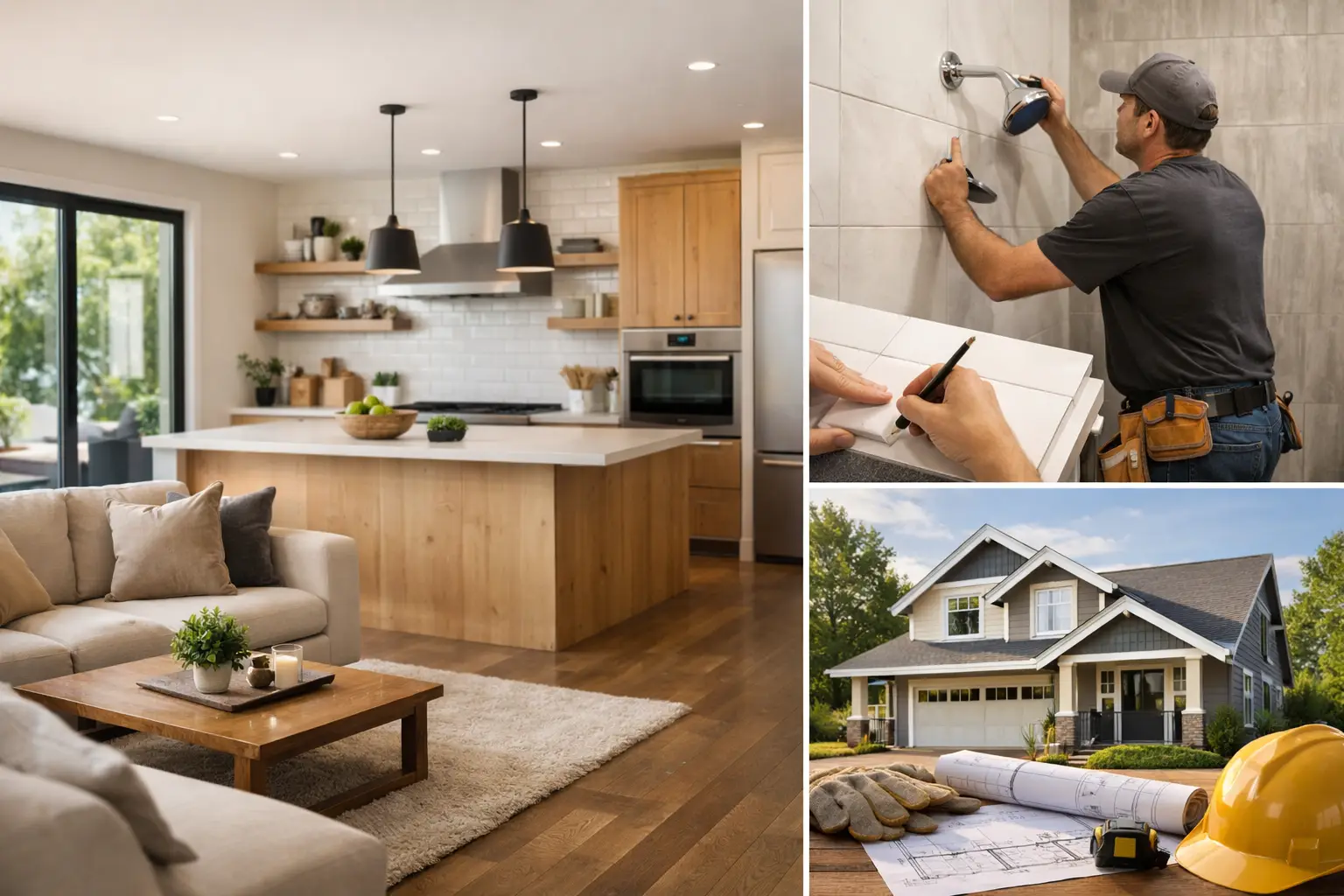
If your home still has the layout, finishes, and storage decisions of a different decade, you feel it every day. A well-planned whole home remodel guide helps you move past patchwork updates and make smart, connected decisions that improve how your home looks, feels, and functions.
A full remodel is different from redoing one room at a time. Every choice affects another one. Flooring impacts baseboards and doors. Kitchen plans can change electrical loads. Bathroom upgrades may expose plumbing issues worth fixing while walls are open. When the work is approached as one coordinated project, the result is usually more cohesive, more efficient, and better suited to the way your family actually lives.
Why a whole home remodel guide matters
Many homeowners start with one frustration – a cramped kitchen, a dated bathroom, poor storage, or a floor plan that no longer fits the household. Then they realize the problem is bigger than one room. The kitchen may open into a living area that feels dark and disconnected. A primary bathroom upgrade may make the rest of the home feel even more outdated. New flooring in one area can make adjacent rooms look unfinished.
That is where a whole home remodel guide becomes useful. It helps you think in terms of the entire house, not isolated upgrades. Instead of solving one issue and creating three more, you can make decisions that support comfort, style, efficiency, and long-term value across the property.
For Sacramento-area homeowners, this approach also makes sense because many established homes have good bones but need better flow, updated materials, and modern functionality. Families staying in place for years often want more than cosmetic change. They want a home that supports everyday life better.
Start with the way you live now
Before talking finishes or fixtures, take an honest look at how your home is working today. This is less about what looks old and more about what creates friction. Maybe the kitchen bottlenecks every morning. Maybe there is not enough lighting where you actually use the space. Maybe a formal dining room sits empty while your family needs a home office, mudroom, or larger laundry area.
The best remodel plans come from real habits. Think about traffic flow, storage, privacy, noise, natural light, and how many people use each space at the same time. If you entertain often, your priorities may be different from a family with young kids. If you plan to stay in the home long term, aging-in-place features may be worth considering now instead of later.
This early clarity keeps the project grounded. It is easy to get distracted by trends, but the strongest remodels are shaped by lifestyle first.
Set priorities before setting the budget
Budget matters, but priorities should come first. If you start with a number and no clear hierarchy, it is hard to know where to invest and where to simplify. A better approach is to divide the project into must-haves, strong wants, and optional upgrades.
Structural changes, aging systems, and layout improvements usually deserve attention before decorative details. If walls are being opened, old plumbing or electrical issues may be worth addressing at the same time. Premium finishes can elevate a home, but they do not fix poor flow or limited function.
That said, there is always a trade-off. Some homeowners prefer to complete the full vision in one project. Others focus on high-impact spaces first while keeping future phases in mind. Neither approach is wrong. It depends on your goals, your timeline, and how disruptive you are willing for the remodel to be.
Build a realistic whole-home budget
Whole-home remodeling costs vary widely because scope varies widely. Cosmetic updates across the house are very different from reworking kitchens, bathrooms, layouts, flooring, windows, and systems all at once. The more moving parts involved, the more important realistic budgeting becomes.
Your budget should cover design, materials, labor, permits, and a contingency for surprises behind walls or under floors. In older homes especially, hidden conditions are common. Water damage, outdated wiring, uneven subfloors, and undersized framing can change the project once demolition begins.
This is where transparent pricing matters. A trustworthy remodeling partner should explain what is included, what is not, and where allowances may affect the final number. Clear communication upfront reduces stress later.
Design the house as one connected space
One of the biggest advantages of a full remodel is consistency. That does not mean every room should look the same. It means the home should feel intentional from space to space.
Think about color transitions, flooring continuity, trim details, cabinet styles, lighting temperature, and hardware finishes. Even when rooms have their own personality, there should be a clear design thread tying the home together. That visual consistency makes the finished result feel more polished and often improves resale appeal as well.
Function should be just as coordinated. If you are opening the kitchen, consider how it relates to dining and living areas. If you are updating bathrooms, think about storage and material choices that support easy maintenance. If you are changing flooring throughout the house, plan transitions carefully so the result feels clean, not pieced together.
A design-forward remodel should still be practical. Beautiful materials need to hold up to daily life, especially in busy households.
Decide what to renovate first
In many full remodels, the order of work matters almost as much as the work itself. Kitchens and bathrooms usually involve the most complexity because they combine plumbing, electrical, cabinetry, tile, ventilation, and finish work. Structural changes often need to happen early. Flooring usually comes after major framing, drywall, and cabinetry decisions are complete.
It may be tempting to start with the most visible spaces, but sometimes the smartest first step is less glamorous. Addressing foundation concerns, outdated systems, or inefficient layouts can protect your investment and prevent rework.
Living through the remodel is another factor. If you plan to remain in the home during construction, phasing can reduce disruption. If you want the fastest overall timeline, a larger coordinated project may be more efficient, though it can be more intense in the short term. It depends on your tolerance for inconvenience and the scope of the work.
Permits, timelines, and expectations
A successful remodel is not just about design. It is also about process. Permit requirements, inspections, material lead times, and trade scheduling all affect the timeline. Homeowners are often surprised by how much coordination happens before visible progress begins.
That does not mean the process should feel unclear. A professional remodeler should walk you through each phase, explain milestones, and keep expectations realistic. Timelines can shift, especially when custom materials or hidden site conditions are involved, but strong project management keeps those shifts from turning into confusion.
For Sacramento-area homeowners, working with a local team familiar with regional permitting, home styles, and construction standards can make a meaningful difference. Experience matters when you are making major changes to a lived-in home.
Choose materials for durability, not just appearance
It is easy to fall in love with showroom moments. The better question is how those materials will perform six months and six years from now. Busy kitchens need surfaces that can handle wear. Bathrooms need moisture resistance. Flooring needs to match the realities of pets, kids, and foot traffic.
Premium materials often pay off, but only when they fit the application. Some products look high-end yet require more maintenance than homeowners expect. Others offer a better balance of style, durability, and long-term value. This is where expert guidance matters. The right material is not always the most expensive one.
Work with a remodeling partner, not just a contractor
A whole-home renovation asks for more than basic construction. It requires planning, communication, craftsmanship, and the ability to connect design goals with practical execution. Homeowners need a team that listens carefully, identifies issues early, and stays accountable from consultation through completion.
That is especially true when you are making decisions that affect the entire house. A dependable remodeling partner helps you avoid costly missteps, coordinate details across rooms, and keep the project aligned with your goals. At Everest Home Solutions, that kind of homeowner-first approach is central to delivering expert remodeling with confidence and clarity.
Think beyond the finish line
The best remodel is not just one that photographs well after the final walkthrough. It is one that still feels right on an ordinary Tuesday morning. Better storage, easier movement, more light, improved comfort, and a layout that supports your routines – those are the upgrades that keep paying you back.
If you are considering a full renovation, give yourself room to plan thoughtfully. A home remodel is a major investment, but when it is done with care, precision, and a clear vision, it can change not just the house, but how you experience living in it every day.